Eczema: Meaning, treatment, types, symptoms and causes
Eczema is a common chronic skin condition that affects both adults and children. Its symptoms in adults are different from those displayed in children. With no known cure, it might be challenging to live with. So, in this article, we delve deep into the types, symptoms, causes and treatment pathways of eczema.
What is eczema?
Eczema (often referred to as atopic dermatitis) is a chronic, non-contagious inflammatory skin condition that causes rough, dry, scaly, and intensely itchy patches. It weakens your skin's natural barrier, leaving it highly vulnerable to external elements, allergens, and moisture loss.
What is the best treatment for eczema?
Eczema treatment focuses on healing the skin barrier, managing flare-ups, and preventing irritation. The daily routine relies on heavy moisturisers (emollients) and trigger avoidance, while flare-ups may require prescription medications or advanced therapies.
Daily Skin Care (Maintenance)
- Moisturise Constantly: Apply thick ointments or creams (like CeraVe Moisturising Cream or Dexeryl Emollient Cream) at least twice a day.
- The "Soak and Smear": Take short (10-minute) warm baths. Gently pat dry and immediately apply moisturiser to damp skin to lock in hydration.
- Choose Gentle Products: Use fragrance-free, hypoallergenic soaps and laundry detergents to prevent irritation.
Treating Flare-Ups
- Topical Corticosteroids: Over-the-counter or prescription hydrocortisone creams are first-line eczema treatment creams used to control itching and inflammation.
- Non-Steroidal Creams: Medications like crisaborole (Eucrisa) can be prescribed to reduce inflammation without using steroids.
- Oral Medications: Antihistamines are frequently used to reduce severe itching, especially at night.
- Bleach Baths: Diluted bleach baths (1/4 to 1/2 cup of plain bleach in a full tub) can help reduce bacteria on the skin and tame flare-ups in severe cases.
Advanced Therapies
For moderate to severe eczema that does not respond to topical treatments, dermatologists may recommend:
- Biologics: Injectable medications (like dupilumab/Dupixent) that target specific immune system responses.
- JAK Inhibitors: Oral or topical daily medications that block inflammation-starting signals in the body.
- Light Therapy (Phototherapy): Controlled exposure to medical-grade ultraviolet light to improve skin appearance.
Eczema types
Eczema is a term for several conditions that cause inflamed, red, dry, and itchy skin. While there are several distinct types, the seven most common variations and their symptoms include:
- Atopic Dermatitis: The most common type, often hereditary, causing dry, red and intensely itchy patches, typically on the face, inside elbows, and behind knees.
- Contact Dermatitis: Occurs when skin reacts to an irritant (e.g., harsh detergents) or an allergen (e.g., nickel in jewellery, poison ivy).
- Dyshidrotic Eczema: Characterised by small, intensely itchy, fluid-filled blisters on the palms of hands, soles of feet, and edges of fingers.
- Nummular Eczema: Also known as discoid eczema, this type causes distinct, coin-shaped itchy patches that can crust over or ooze.
- Seborrheic Dermatitis: Causes a greasy, scaly eczema rash, often on oily areas like the scalp (dandruff), face, and chest.
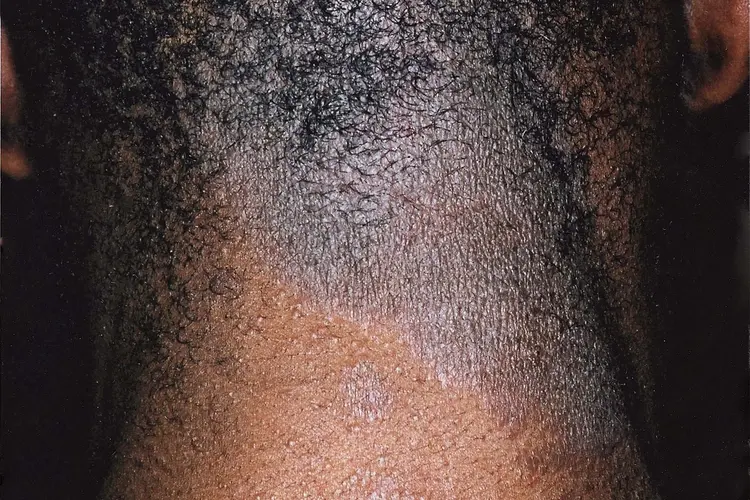
- Neurodermatitis (Lichen Simplex Chronicus): Results in thick, leathery, and discoloured skin patches caused by a cycle of chronic, localised scratching. The image above shows this condition on the back of the neck.
- Stasis Dermatitis: Triggered by poor blood circulation, leading to swelling, inflammation, and varicose veins, typically in the lower legs.
Common Symptoms of Eczema
Symptoms can range from mild to severe and often occur in localised flare-ups. The exact appearance depends heavily on skin tone (e.g., ranging from red to grayish-brown or purple):
- Intense Itching: Often the most prominent symptom, which is typically worse at night.
- Visibly Affected Skin: Red to brownish-grey patches, scaly textures, and thickened/leathery skin from chronic scratching.
- Damaged Skin: Small, raised bumps that may ooze fluid and crust over when scratched.
- Dryness: Rough, flaky, or cracked skin that is sensitive and raw.
Signs of eczema in babies
Baby eczema (atopic dermatitis) typically presents as dry, intensely itchy, and red or discoloured patches of skin. It often appears during the first six months of life, commonly starting on the cheeks and forehead before spreading to the body's joint creases and limbs.
Visual & Physical Signs
- Colour: On lighter skin, the patches appear red. On darker skin, they may look purplish, greyish, or brownish.
- Texture: Patches are characteristically dry, rough, scaly, or thickened.
- Active Flare-ups: The skin may become swollen, raw, or cracked and bleed. Small blisters may form, leak fluid, and crust over.
Typical Locations by Age
- Under 6 months: Primarily appears on the scalp, cheeks, forehead, chin, and around the mouth.
- Over 6 months: Frequently spreads to the trunk, outer surfaces of the arms and legs, and the folds of the elbows and knees.
Telltale Symptoms
- Severe Itching: Often called "the itch that rashes," it is generally the defining symptom. Your baby may seem unusually fussy, rub against bedding to scratch, or have disrupted sleep due to discomfort.
- Cyclic Flares: Symptoms tend to flare up and worsen, followed by periods of remission when the skin clears.
Signs of Infection
Because eczema weakens the skin barrier, scratching can lead to secondary infections. You should consult your paediatrician if you notice:
- Weeping, fluid-filled blisters or sores
- A yellowish crust forming over the rash
- Increased swelling, warmth or deepening of the rash's colour (dark red/purple)
- The baby develops a fever
What causes eczema?
While the exact root cause of eczema is unknown, medical experts believe it results from a combination of genetics, an overactive immune system, and environmental triggers. These factors compromise the skin's protective barrier, making it dry and susceptible to irritants.
Here is a breakdown of the primary factors that cause and trigger eczema:
1. Genetics and the Skin Barrier
- Filaggrin Mutations: Many people with atopic dermatitis (the most common type of eczema) have a mutation in the gene responsible for creating filaggrin—a protein that helps your skin retain moisture and maintain a healthy protective barrier.
- Moisture Loss: Without enough filaggrin, critical moisture escapes the skin, allowing environmental irritants, bacteria, and allergens to easily enter.
2. Immune System Overdrive
- In people with eczema, the immune system overreacts to minor, everyday substances.
- When triggered by an allergen, the immune system produces excess inflammation, leading to red, itchy, and painful skin.
3. Common Triggers
While genetics set the stage, specific environmental and lifestyle triggers often cause flare-ups:
- Irritants: Harsh soaps, laundry detergents, cosmetics, and synthetic or scratchy fabrics like wool.
- Environmental Allergens: mould, pollen, dust mites, and pet dander.
- Climate: Low humidity, extremely dry air, or drastic temperature changes.
- Stress: Emotional stress releases cortisol and other chemicals that worsen skin inflammation.
- Diet: Certain foods (most commonly dairy, wheat, eggs, and soy) can exacerbate symptoms, particularly in young children.
- Skin Infections: Bacteria like Staphylococcus aureus can colonise broken skin and trigger flare-ups.
What causes eczema in babies?
Baby eczema (atopic dermatitis) is primarily caused by a combination of genetics and environmental triggers, just like the ones mentioned above. Babies often inherit a skin barrier that lacks a protective protein called filaggrin, making it harder for the skin to retain moisture and keep irritants out.
FAQs
Does eczema ever go away?
There is no cure for eczema, but it is highly manageable. Many children outgrow it or see significant improvement by puberty. In adults, it is typically a chronic condition, though proper care can lead to long periods of remission with no visible symptoms.
How to cure eczema permanently.
While there is no permanent cure for eczema (atopic dermatitis), it is a highly manageable condition. Many children outgrow it by puberty, and adults can achieve long-term remission by combining a consistent daily skincare routine, trigger avoidance, and modern medical treatments.
Is eczema contagious?
No, eczema is not contagious. You cannot catch it or spread it to someone else through physical contact, sharing items, or being near someone who has it. It is a non-infectious inflammatory condition caused by a combination of genetics, an overactive immune system, and environmental triggers.
Even though eczema is a difficult skin condition to have, avoiding environmental triggers, such as harsh soaps and detergents, and managing its symptoms with topical creams and corticosteroids might help you regain confidence in your skin and allow you to complete your daily tasks with little to no irritation.
📍 Radiance Skin Center – Landmark Plaza, Argwings Kodhek Road, opposite Nairobi Hospital.
📞 +254111632411 | 💬 Book via WhatsApp